Iris Publishers - Online Journal of Dentistry & Oral Health| Minimal Invasive Approach in Atrophic Jaws Rehabilitation Using A Reduced Number of Implants
Authored by Angelo Cardarelli,
Introduction
Implant-prosthetic rehabilitations of immediate jaws represent a therapeutic possibility with a high success rate and satisfaction for the surgeon and the patient. However, the anatomy of the jaws, periodontal and iatrogenic problems represent limitations to the conventional rehabilitations of edentulous patients and with serious problems of the residual dental elements that would necessary preimplant bone regeneration treatments. These methods are to be considered for patients with a high biological and economic cost, with high morbility and based on the operator experience. For these reasons, the modern implant guidelines are based on clinical protocols that used the residual basal bone without bone regeneration. These methods, well supported by scientific data, provide for an immediate restoration of the function by positioning implants with immediate loading [1-4]. This approach is based on the placement “straight” implants in anterior area and tilted in posterior area. The reduced number of implant rehabilitations, whether they are inclined or not, are proved by numerous scientific studies showing that four implants are sufficient to support a fullarch prosthesis. Since the immediate loading of tilted and axial implants with placement of an immediate provisional prosthesis is proposed as a predictable, fast and cheap method to treat jaws atrophy, the purpose of this article is to illustrate the atrophic jaws rehabilitation with immediate loading of a patients with severe problems of residual dental elements using only basal bone [5-14].
Materials and Methods
Case 1
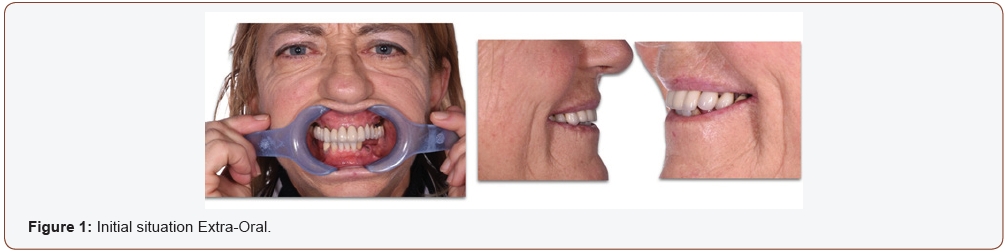
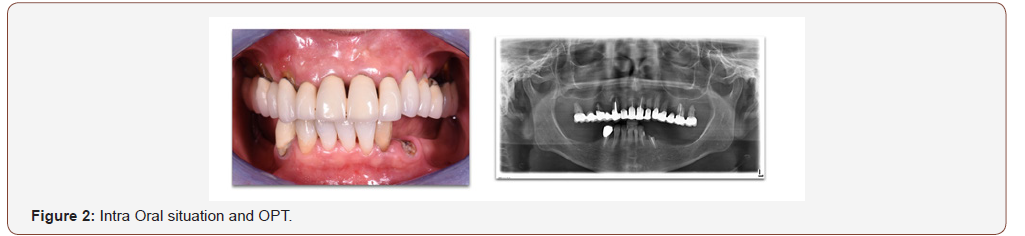
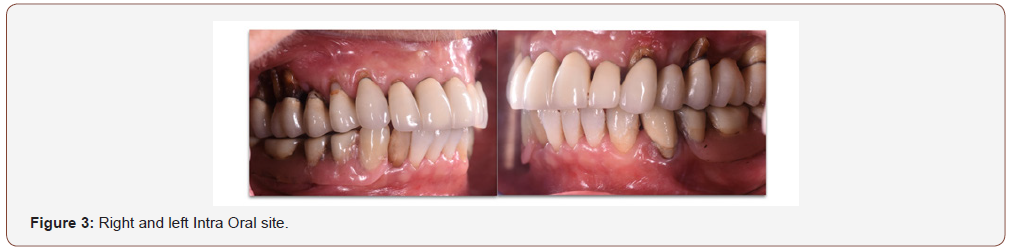
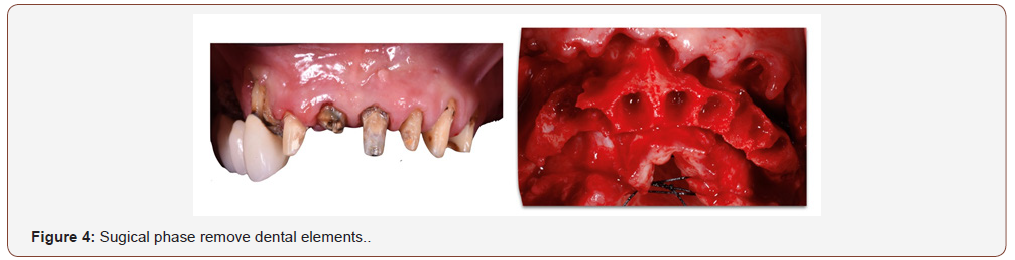
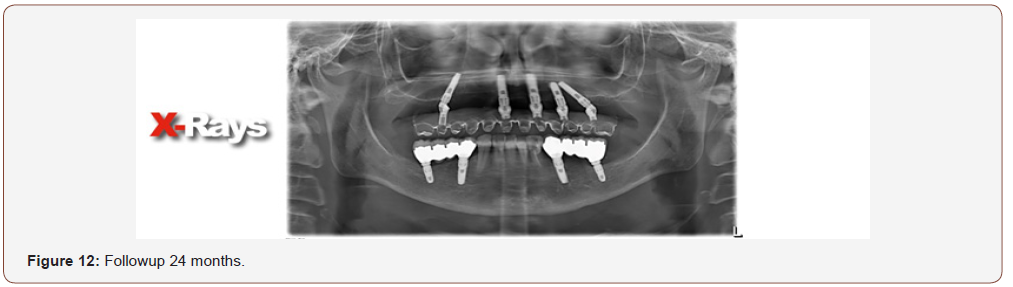
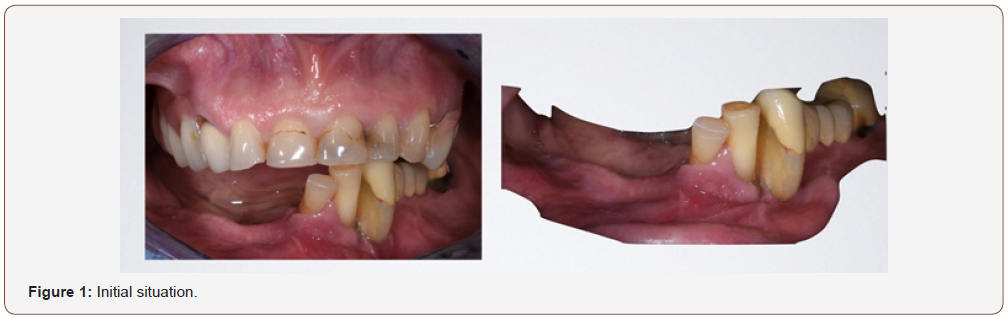
In the first case it is described a woman patient of 65 years, in good health, with a negative history, smoker. The clinical and radiographic examination shows a serious periodontal disease, with morbility of the residual dental elements. So, we decided to remove dental elements residues, and to insert 5 implants with immediate loading. (Figure 1-3)
Surgical and prosthetic procedures
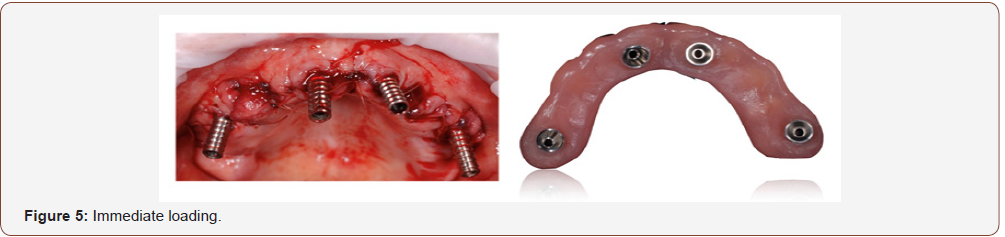
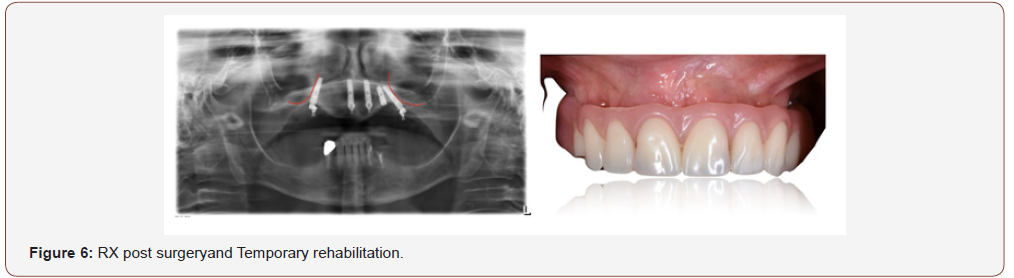
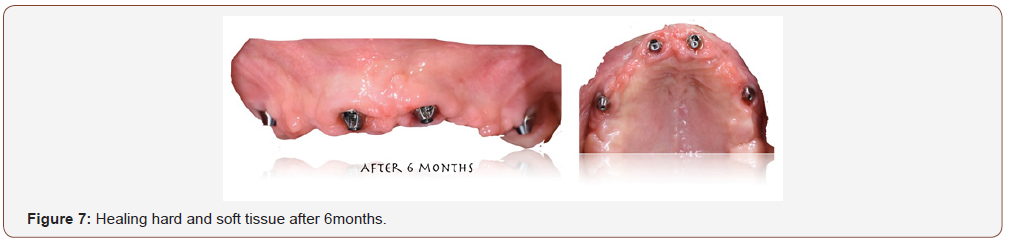
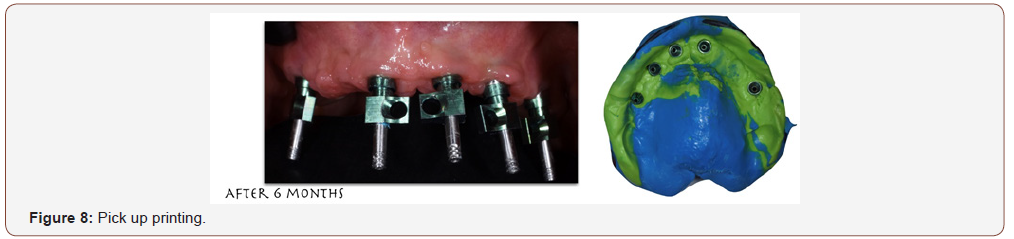
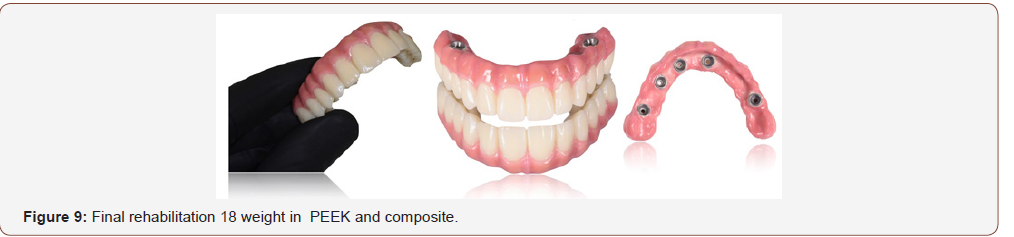
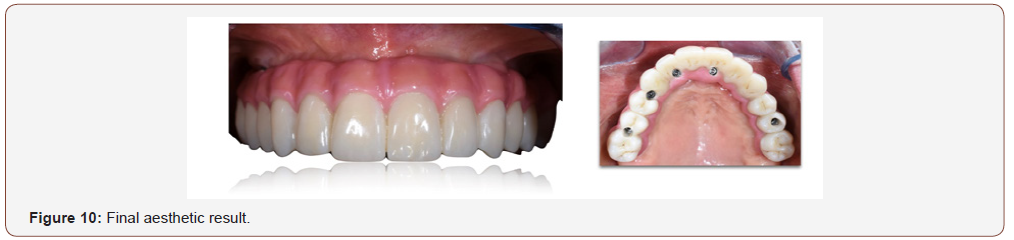
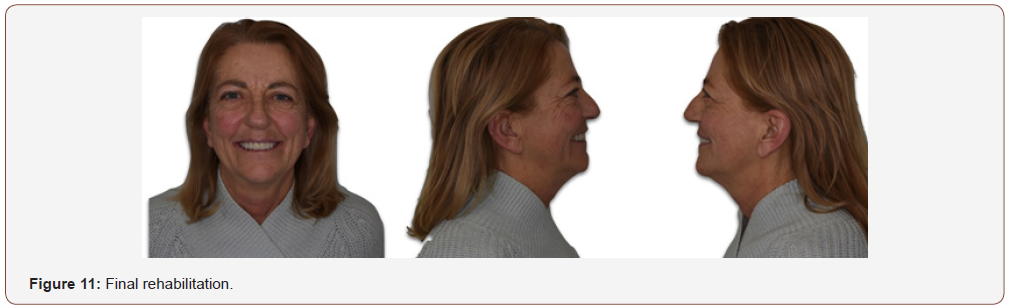
One hour before the operation, 1 g of amoxicillin is given to the patient, to be taken twice a day for the following 6 days. Surgical procedures are started under local anesthesia, 20 mg / mL optocaine with 1: 80,000 adrenaline. So dental elements are removed, then a crestal incision is made from the area of the first right molar to the first left molar with two distal mucoperiosteal incisions to research the anterior wall of maxillary sinus. The distal osteotomy has tangential to the anterior wall of the maxillary sinus: this inclination makes it possible to obtain an emergence of the implant platform at the level of the first molar The posterior implants, with a diameter of 4.0mm and a length of 15 mm(OSSTEM), are positioned. The posterior implants generally emerge in the position of the second premolar. Subsequently, three axial implants are positioned, two 4.0 mm in diameter and 15 mm in length (OSSTEM) and one 4.0 diameter and 13 length. For the anterior implants are positioned Extreme Abutments of 17 degrees, while for the posterior of 30 degrees to obtain a parallelism between the fixtures. These degrees of angulation are chosen to allow the access hole of the prosthetic screw an occlusal or lingual position with respect to the teeth mounted on the provisional prosthesis. The suture is made with 4/0 silk thread. At the end of the surgery the previously made temporary prosthesis is screwed According to the diagnostic set up, whose vertical dimension is established. One of straight implants has not been done immediate loading because it hasn’t a sufficient primary stability FOTO 4-5-6-7. The patient is given a semisolid diet for 2 months following the operation. At 6 months from the osseointegration and stabilization of the soft tissues the impressions are detected and placed a screwed toronto with material PEEK with weight only 18 grams. (Figure 8-13)
Case 2
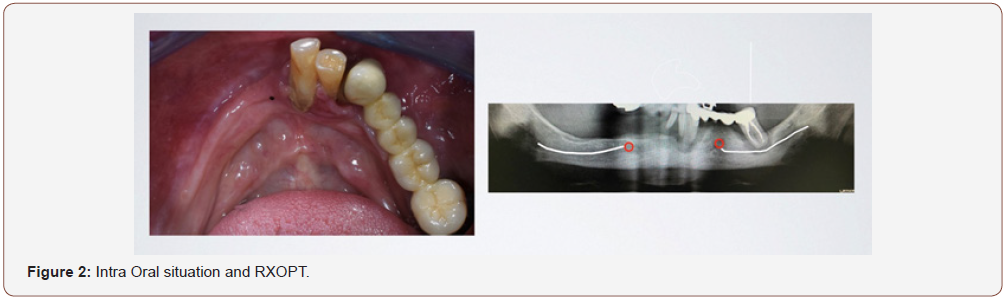
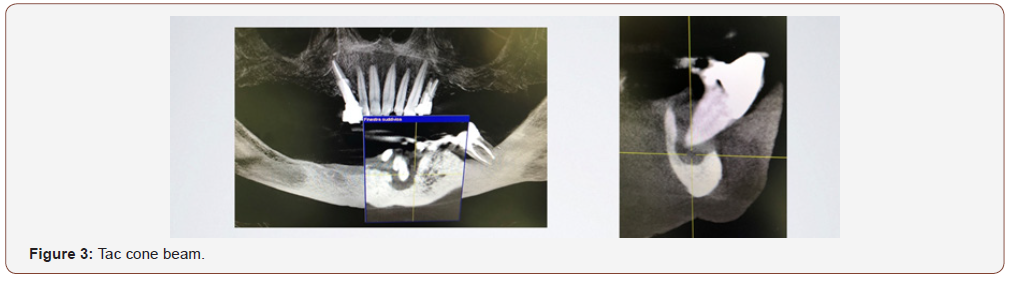
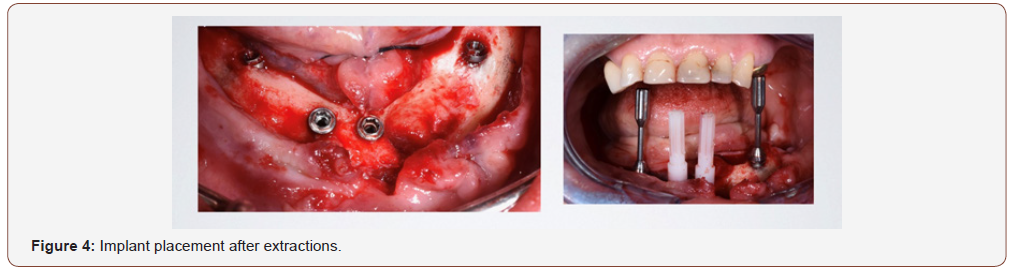
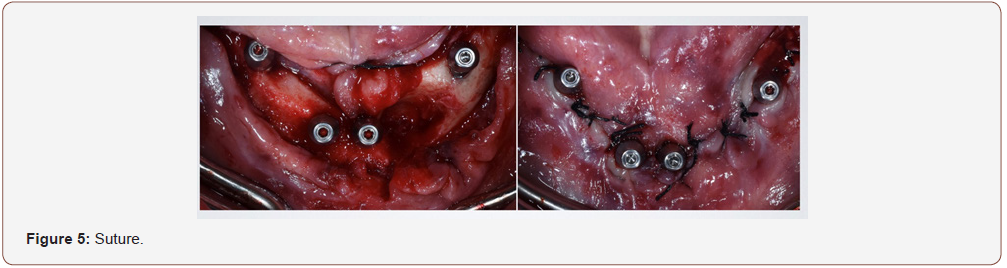
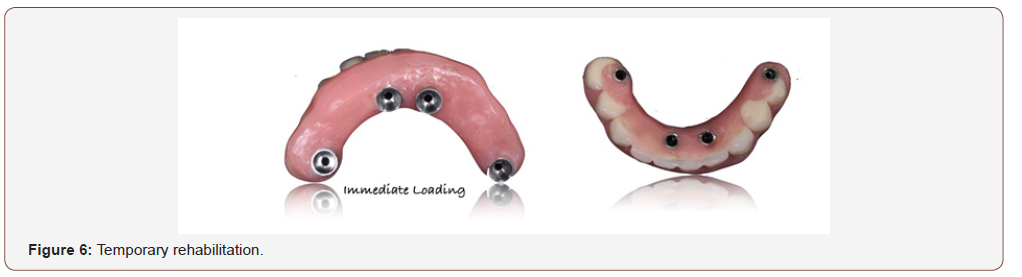
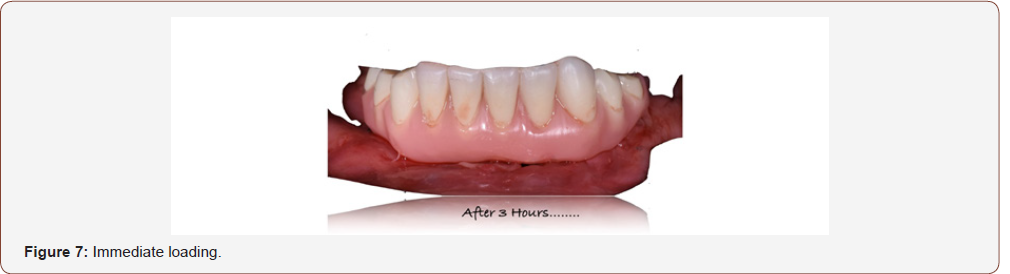
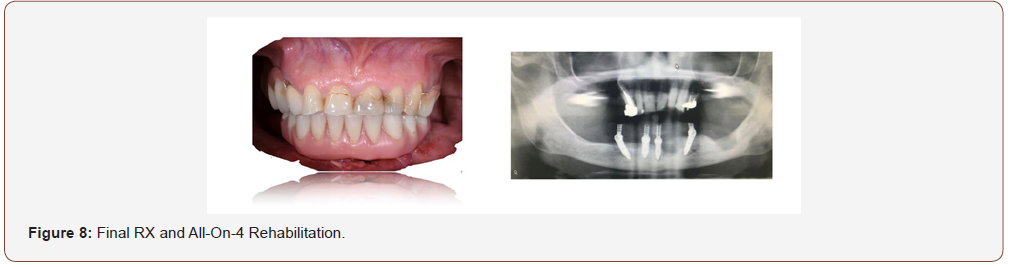
In this case it is described a woman patient of 69 years, in good health, with a negative history, not a smoker. The clinical and radiographic examination (OPT and Cone Beam) shows a serious periodontal disease, with morbility of the remaining dental elements with severe atrophy. So, the planning will be to remove dental elements residues, and to place 4 implants with immediate loading according to the “All on 4” method. (Figure 1-3). One hour before the operation, 1 g of amoxicillin is given to the patient, to be taken twice a day for the following 6 days. Surgical procedures are started under local anesthesia, 20 mg / mL optocaine with 1: 80,000 adrenaline. So dental elements are extracted, then a crestal incision is made from the middle of mandible to the posterior area to preserve alveolar nerve without mucoperiosteal incisions to research the emergence of alveolar nerve. The posterior implants, with a diameter of 3.8 mm and a length of 13 mm, are positioned above the mentally foramen and inclined mesially by 30-45 degrees to the occlusal plane. The axial implants are positioned 3.8 mm in diameter and 11 mm in length (Winsix Biosafin) For the front implants are positioned Extreme Abutments straight, while for the posterior of 30 degrees to compensate for the lack of parallelism between the fixtures. These degrees of angulation are chosen to allow the access hole of the prosthetic screw an occlusal or lingual position with respect to the teeth mounted on the provisional prosthesis. The suture is made with 4/0 silk thread. At the end of the operation the previously made temporary prosthesis is screwed according to the diagnostic set up, whose vertical dimension is established and corrected by the study of master model and the cephalometric study. The patient is given a semisolid diet for 2 months following the operation. At 4 months from the osseointegration and stabilization of the soft tissues the impressions are detected and placed a screwed toronto with composite material. (Figure 4-8)
Results and Conclusion
At the 24-month follow-up the clinical and radiological appearance of soft and hard tissues is optimal and no pathological signs or prosthetic complications were recorded. This surgical technique represents a valid and predictable therapeutic alternative to the techniques of bone augmentation and regeneration. The biomechanical aspect on which the use of angled implants is based is the reduction of the cantilever and therefore a better and homogeneous distribution of the loads at the prosthetic level. Numerous studies have reported a high survival rate, others have assessed the amount of stress in the peri-implant bone, these studies showed that the single angled implant. Subjected to axial loads presents greater perimplant bone stress than the single axial implant; however, when the angled implants is joined to other implants with an educed cantilever, it presents a minor mechanical stress at the per implant level compared to solidarizza implants but with a greater cantilever.
For more articles in Dentistry & Oral Health: https://irispublishers.com/ojdoh/
Read more: Full Text
Read more: Full Text

Comments
Post a Comment