Iris Publishers - Online Journal of Dentistry & Oral Health| Evaluation of a Topical Phenytoin on Gingival Wound Healing

Authored by Mehdi Honarparvar,
Introduction
Proper wound healing processes are important in the prevention of complications (i.e. post-operative infection) which may lead to the formation of scar tissue that compromises esthetics. This would indicate that the acceleration of wound healing might be an important target in medicine. In dentistry, gingival wound healing comprises a series of sequential responses that allow the closure of breaches in the masticatory mucosa. This process is of critical importance to prevent the invasion of microbes or other agents into tissues, avoiding the establishment of a chronic infection. Wound healing may also play an important role during cell and tissue reaction to long-term injury [1]. Wound healing is very important and should always address the needs of the patient, promote normal healing and prevent complications. Dressings applied to acute wounds may require review by the patient themselves so clear instructions are necessary on what to do, when to do it and what should be raised as a concern. Surgical wounds are usually left covered for up to a week after surgery. In the case of graft donor sites, the dressing is left for up to 2 weeks [2].
Phenytoin is an example of agent that has been widely studied for its supposed benefits albeit controversial effects in wound healing. Oral phenytoin is used widely for the treatment of convulsive disorders, particularly as an effective anticonvulsant against tonic-clinic and partial seizures. A common side effect with phenytoin treatment of is the development of fibrous overgrowth of gingival tissues. This apparent stimulatory effect of phenytoin on connective tissue suggests the possibility for its use in wound healing, promoting numerous investigations on its contribution to wound healing processes [3].
Method of Research
This study utilized the experimental method of research. This methodology relied on random assignment and laboratory controls to ensure the most valid, reliable results. Although the researcher recognized that correlation does not mean causation, experimental designs produce the strongest, most valid results.
Procedures of data gathering
The test animals in the study were composed of 24 rabbits divided equally into two groups (experimental and control). For the experimental group, 6 rabbits underwent horizontal incision on the upper maxillary anterior labial part while 6 rabbits underwent horizontal incision on the lower mandibular anterior labial part. General anesthesia was then administered in 10 to 15 minutes to the rabbits. After this, sterile water was utilized in cleaning the affected area and then 1% phenytoin was applied. The same protocol was applied for the control group except for the topical PHT application. For the first, second and fourth weeks, 24 test animals respectively were sent to the laboratory. Likewise, per any week 4 rabbits from the experimental as well as 4 other rabbits from the control group were introduced. They were all observed from first to four weeks in the laboratory for histological and clinical analysis.
Phenytoin preparation
Preparation of phenytoin mucoadhesive paste 1% Phenytoin mucoadhesive paste 1% was prepared. As part of the preparation of this, 1 mg of phenytoin capsule was mixed with 100 mg of mucoadhesive paste compositions (including polyethylene LD, liquid paraffin, gelatin powder, lemon pectin powder, sodium carboxy methylcellulose powder, equal from each one). The resulting paste was deposited into 100mg tubes [4].
Results
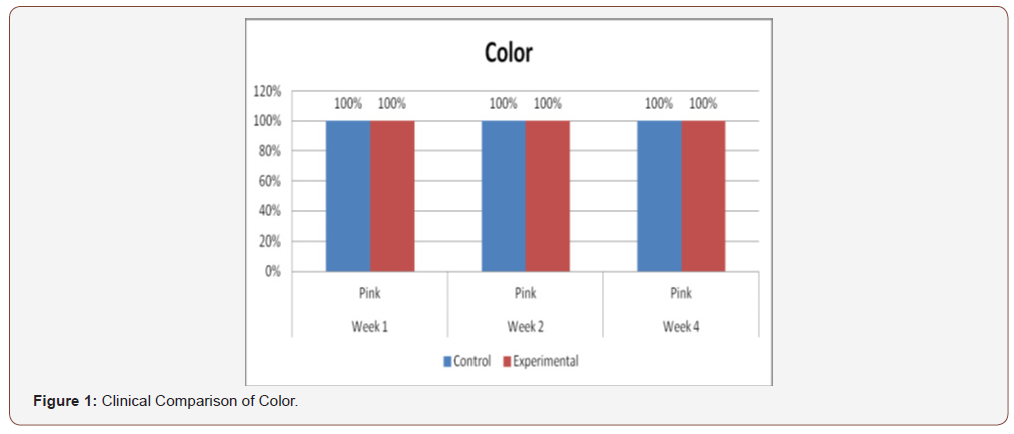
(Figure 1) demonstrates the comparison of clinical analysis of color between control and experimental groups on the 1st, 2nd, and 4th weeks’ observation. No significant differences were observed with p-value above 0.05 (p=1.00) at all observations.
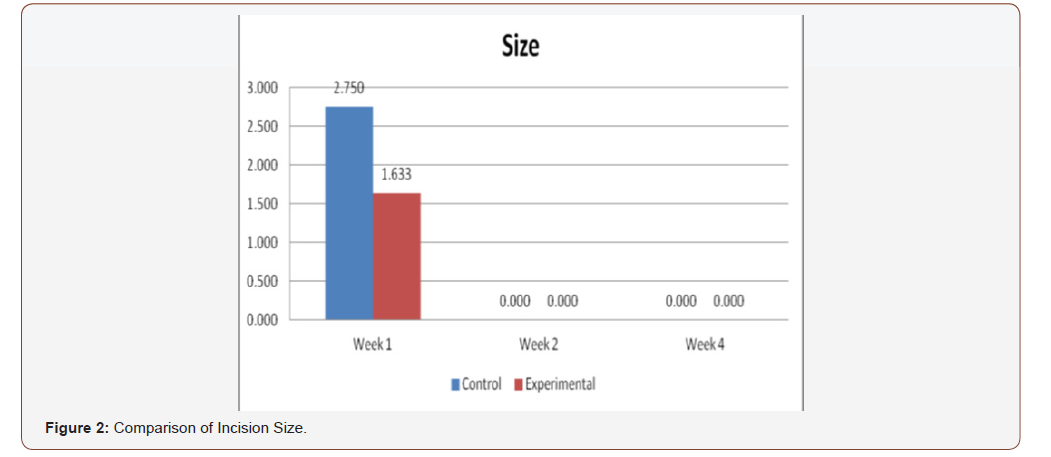
(Figure 2) displays the comparison of clinical analysis of size between control and experimental groups on the 1st, 2nd, and 4th week’s observation. No significant differences were observed on 2nd and 4th week with p-value above 0.05 (p=1.00). However, significant differences were observed on week 1 (p=0.017).
(Figure 3) shows the comparison of clinical analysis of gross appearance between the control and experimental groups on the 1st, 2nd and 4th week’s observation. No significant differences were observed on 2nd and 4th week with p-value above 0.05 (p=1.00). Statistically significant differences were observed on week 1 (p=0.005) only.
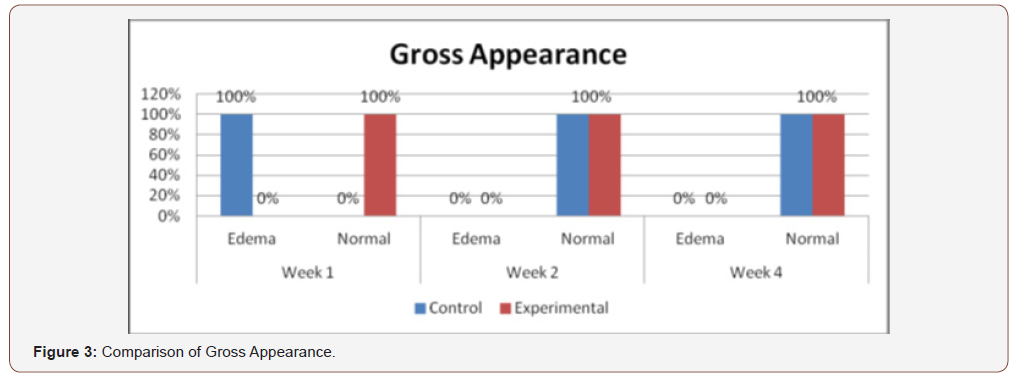
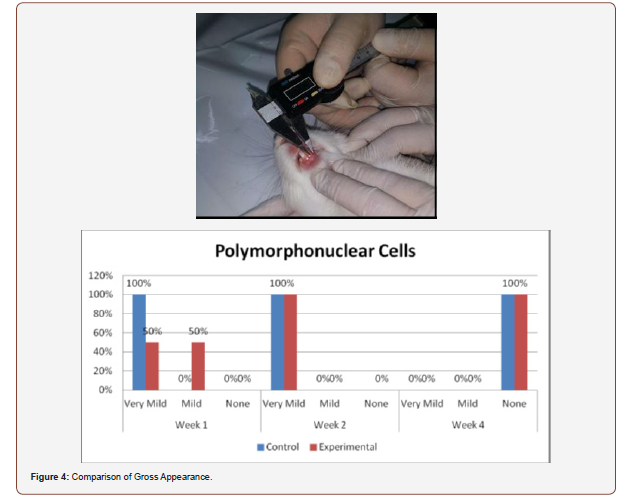
Figure 4) shows the comparison of histologic counts of polymorphonuclear cells between the control and experimental groups on the 1st, 2nd and 4th weeks’ observation. No significant differences were observed within all the observation periods (p =0.102, 1.000, 1.000).
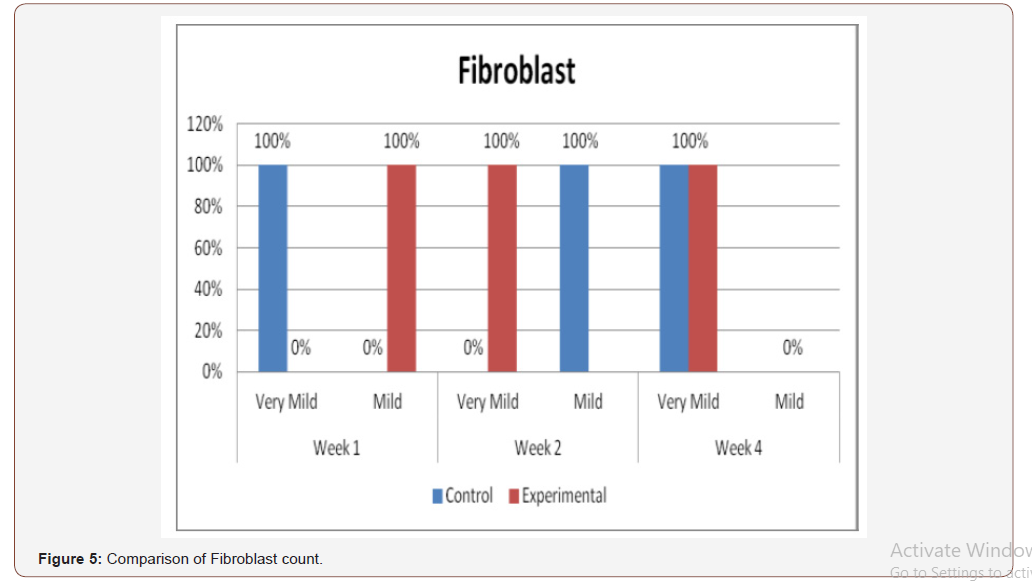
(Figure 5) presents the comparison of histologic analysis of fibroblast count between the control and experimental groups on 1st, 2nd and 4th weeks observation. Significant differences on fibroblast numbers were seen between the 2 groups on the 1st and 2nd weeks of observation (p=0.005).
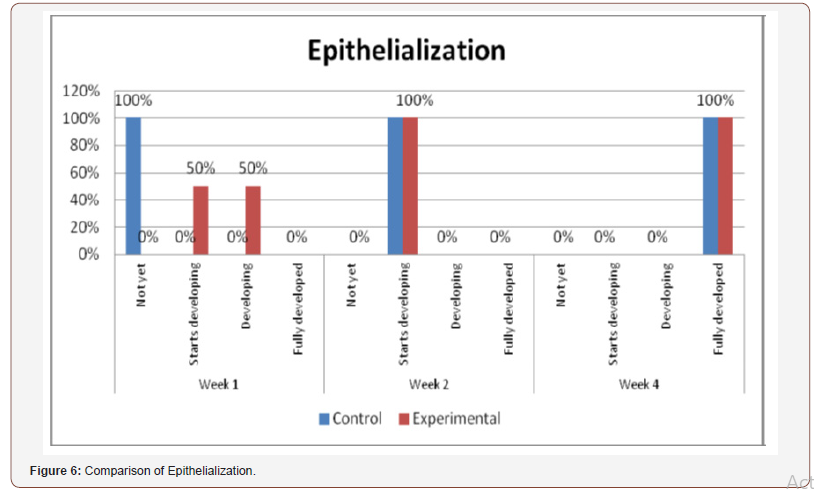
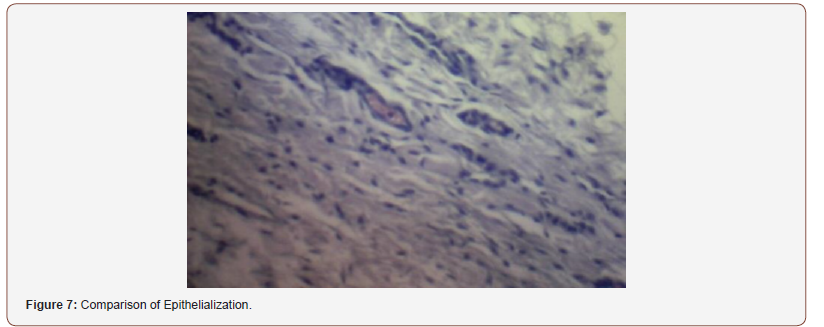
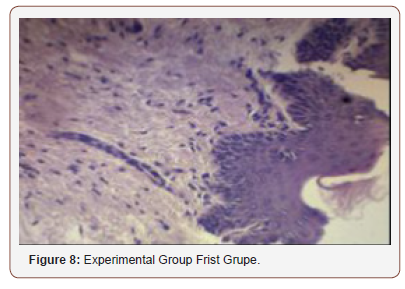
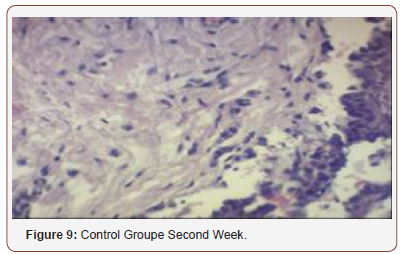
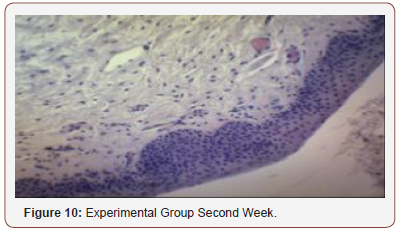
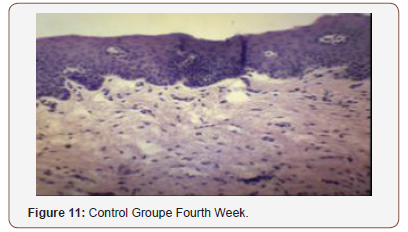
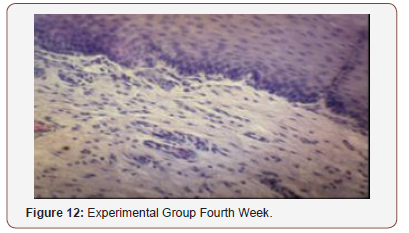
(Figure 6) shows the comparison of histopathological analysis of epithelialization between control and experimental groups on 1st, 2nd and 4th weeks observation. No significant differences were observed on 2nd and 4th weeks (p=1.00). Significant differences were only observed on week 1 (p=0.018) (Figures 7-12).
Histological Analysis
Inconsistent results were seen in the analysis of the fibroblast presence. For the control group, an expected increase in fibroblast count was noted from the 1st to the 2nd week, in accordance with physiologic remodeling of the epithelium following injury. But on the 3rd week, very minimal fibroblasts were seen compared to the previous (2nd) week. A comparison of the fibroblast count of the 1st week shows a significant difference (p = 0.005) in favor of the PHT-treated group. This phenomenon can be attributed to PHT’s well-documented induction of hyperproliferation of fibroblast cells, with concomitant increase in collagen production (Ghanpachi 2013) [5-13]. However, more fibroblasts were seen on the control group on the 2nd week. The inability of the test group to maintain the increased fibroblast production might be due to the localized (i.e. non-systemic) and single-dose application of PHT, leading to minimal concentrations of the drug, with an accompanying short duration of activity [14-21]. Analysis of the samples showed an expected decrease (albeit minimal) in the numbers of polymorphonuclear cells (PMN) for both control & test groups following incision (from the 1st to the 2nd week), followed by a sharp reduction, with no histologically visible cells in the 4th week. However, no differences in the amount of the said decrease in PMN cells were found between the 2 groups, despite the findings of some studies that document phenytoin’s immunosuppressive activity (Przegl Lek 2008) [21-30]. PHT’s reported acceleration of healing of epidermal wounds has been associated with its interaction with glucose transporter protein-1 (GLUT-1) presence in the epidermal basal layer. Oral epithelium lacks this said protein, which might in turn affect the longevity and/or effect of PHT on wound healing of this particular epithelium [3].
Clinical Analysis
Clinical analysis of the color of the tissues surrounding the incisions show no differences between the 2 groups at all weekly intervals (p = 1.00). Several studies on PHT’s acceleration of wound healing on the epidermis characterize the said wounds as either being the result of traumatic injuries (i.e. accidents) or pathologies (i.e. leprosy). The experimental wounds in this study were single linear incisions made by a scalpel blade for both control and test groups; the surrounding tissues were not subjected to any form of trauma. As such, the gross appearance of the surrounding tissues appeared to be of the same quality clinically, despite the increased fibroblast proliferation in the test group (as seen histologically at the first week of observation) [31-36].
Comparison of the size of the incisions show a significant difference in the decrease in size between both groups at the 1st week (p = 0.017), with the test group exhibiting a shorter incision 1 week post-operatively. A possible mechanism behind this is PHT’s stimulation of fibroblast proliferation with accompanying reduction of collagenase activity (Ghanpachi 2013). No differences were seen among the 2 groups at the 2nd and 4th week observation period since by that time, all the wounds have already healed superficially (i.e. clinically). Further analysis of the gross appearance of the incisions at the same observation periods reveals the same pattern. During the 1st week, all samples from the control group showed clinical signs of edema compared to the PHT group (p = 0.005) [37-42].
Conclusion
Within the limitations of this study, although there were initial differences in epithelialization, number of polymorphonuclear cells and fibroblasts, color, size and gross appearance, both groups displayed essentially the same features with regards to their wound healing capacities after 4 weeks. Within this context, a single application of 1% topical phenytoin shows improved efficacy on wound healing.
For more open access journals in iris Publishers
https://irispublishers.com/journals.php
For more articles in Dentistry & Oral Health:
https://irispublishers.com/ojdoh/
Read more: Full Text

Comments
Post a Comment