Iris Publishers - Online Journal of Dentistry & Oral Health| Bonding Monolithic Ultra-Translucent Zirconia Restorations to Endodontically Treated Teeth Systematic Review
Authored by Samir Koheil,
Formulate the Research Question
Bonding monolithic zirconia to endodontically treated teeth
PICO: P-Problem: Bond strength endodontically treated teeth.
I-Intervention: Adhesion of monolithic ultra-translucent zirconia with sandblasting surface treatment.
C-Comparison: Zirconia adhesion to endodontically treated teeth and vital teeth.
O-Outcome: Bond strength.
Introduction
Restoration of root filled teeth could be challenging due to Structural difference between vital and non-vital teeth. Altered physical characteristics of the tooth structure remaining after endodontic therapy exhibit different changes, Calcified tissues of pulp less teeth have 9% less moisture content than in vital teeth [1]. The collagen too has fewer mature and more immature cross links. Changes in collagen cross linking and dehydration of the dentin result in 14% reduction in strength and toughness of endodontically treated molars. The combined loss of structural integrity, loss of moisture and loss of dentin toughness compromises, microstructural-composition changes, and changes in mechanical properties (bond strength, micro-hardness, nanohardness, modulus of elasticity and tensile strength [2,3].
Treating dentin with 5% sodium hypochlorite for two minutes produces dissolution of collagen and collagen-mineral bond, as well as changes in apatite crystallinity, resulting in a surface rich in apatite crystals [4]. Therefore, the substrate becomes more brittle, decreases its physical properties and produces a very weak bond and that the only fact of treating dentine with sodium hypochlorite and EDTA reduces surface micro-hardness [5-7]. Zirconia is resistant to aggressive chemical agents solving agents. Such chemical stability predicts superior long-term performance under the tough conditions of the oral environment [8].
Various chemical products were developed that is, a phosphate ester monomer, 10-methacryloyloxydecyl di-hydrogen phosphate (MDP) [9,10]. Nevertheless, the established bond strength was not sufficient for retaining adhesive zirconia restorations, as debonding under function was previously reported [11]. Various silica- coating methods were investigated and proved inefficient in increasing the retention of zirconia crowns [12,13]. Airborneparticle abrasion and roughening with diamond points, also failed to establish adequate mechanical retention to zirconia substrates [14,15]. In case of insufficient remaining tooth structure with more than one marginal ridge lost and weak remaining tooth structure therefore indirect restorations such as zirconia crowns inlays or onlays are the treatment of choice [16-21]. Chelators such as EDTA interact with the mineral content of dentin causes dentin erosion and softening as they mainly deplete calcium through complex formation and also affect non-collagenous proteins: proteoglycans, dentin phosphoproteins and sialoprofens [22].
Biological oxidant such as NaOCl and H2O2 cause the oxidation of some of the components of the dentin matrix, particularly collagen. They form protein-derived radicals that compete with the propagating vinyl- free radicals generated by the photo-activation of resin adhesives, resulting in premature chain termination and incomplete polymerization in addition; they liberate oxygen, which causes strong inhibition of polymerization in the adhesive system [23].
Zinc oxide and eugenol sealers and most temporary cements leave behind an oily debris NaOCl and H2O2 form an oxygen rich surface in dentin. The oxygen-rich layer left behind NaOCl can be reversed by a reducing agent like sodium ascorbate or ascorbic acid Gonulol et al. [24] reported that, treatment of access cavities and pulp chambers with 10% sodium ascorbate solution following endo treatment restores the sealing ability of resin with root dentin. 10% sodium ascorbate hydrogel might be as effective as 20% sodium ascorbate hydrogel in neutralizing the oxidizing effect and increasing the bond strength [25]. Chlorhexidine can significantly improve the resin-dentin bond stability anti-collagenolytic activity, because of its broad-spectrum metalloproteinase (MMP)-inhibitory effect [26-28]. Zamany et al [29], Abdullah et al [30] found that fusion of glass beads and plasma spraying, gave promising results.
Material and Methods
Two phases of the study selection were conducted
1. Abstracts and titles were selected.
2. Full tests of the selected titles were obtained and read to determine the final sample set through 2000 and 2019.
Also Nonrandomized longitudinal experimental clinical studies, longitudinal prospective studies, and longitudinal retrospective studies were reviewed. The choice of key words was intended to be broad to collect as much relevant data as possible both manually and electronically also, the references were thoroughly inspected for more possible candidates till May 20, 2019.
Inclusion and Exclusion Criteria
A search was performed in MEDLINE and PubMed for in vivo and vitro trials on zirconia restorations published between 2000 and 2019.
The main keywords used for the search; number of articles produced were:
1) ‘‘Zirconia and clinical’’-329 articles
2) ‘‘Zirconia and fixed partial dentures’’- 130 articles
3) ‘‘Zirconia and FPD’’-23 articles
4) ‘‘Zirconia and implant abutments’’-61 articles
5) ‘‘Zirconia and single crowns’’-73 articles
In addition, a manual hand search was conducted through the literature to identify any possible clinical trials on Y-TZP, monolithic zirconia which may have not been listed on MEDLINE and PubMed. The articles found were read to identify ones which satisfied the following inclusion and exclusion criteria:
Inclusion Criteria
1. Human in vivo.
2. In-vitro studies.
3. Study has a set inclusion and exclusion criteria.
Exclusion Criteria
1. Case reports.
2. Animal studies.
3. Patients with bruxism or any para-functional habits.
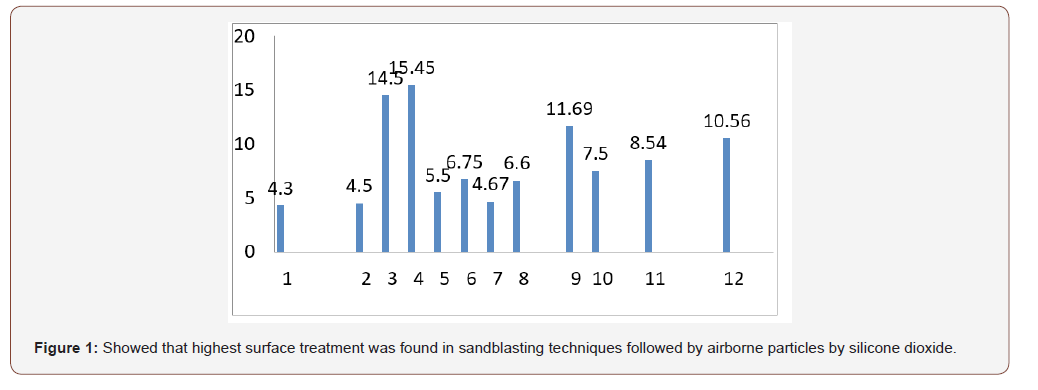
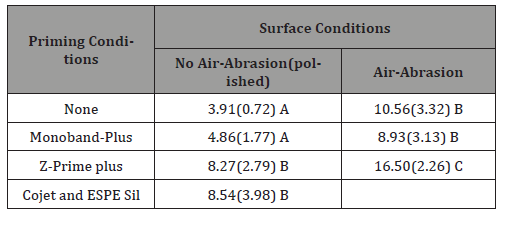
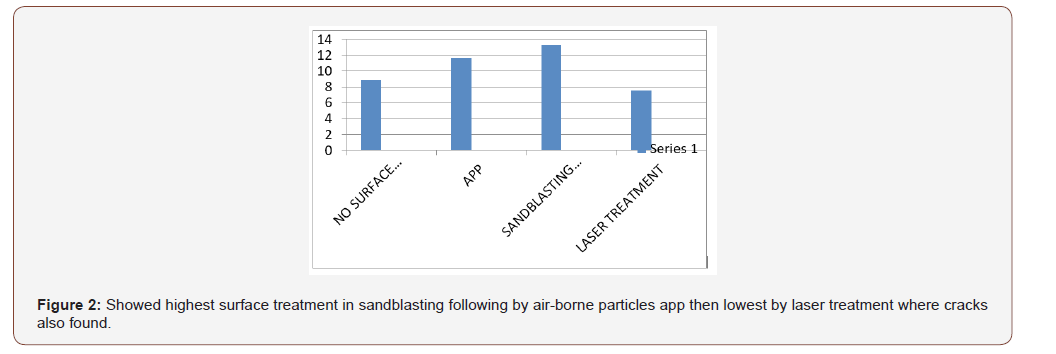
The search yielded 12 articles and abstracts involving Y-TZP restorations which satisfied the inclusion criteria (Figure 1). From all retrieved papers the ones that described techniques developed to increase bond strength of ZrO2 to resin cement and their relationship with the material’s composition were selected. Bond strength methods of selected papers were: Shear tests (19 papers), Microshear tests (3 papers), Tensile tests (5 papers), Microtensile tests (11 papers), and pull-out tests (01 paper). Just one paper employed both micro-tensile and shear bond strength methods, observing similar results (Table 1-3, Figure 2, Table 4, Figure 3-7).
Only zirconia-based ceramics BS measurements were listed in the table. Treatments were divided into: Chemical surface treatments, Mechanical surface treatments, and Alternative treatments.
Table 1:Retrieved papers from PubMed database search are, grouped in accordance with bond strength (BS) tests, type of ceramics, surface treatment method (STM), resin cements and results for BS improvement.
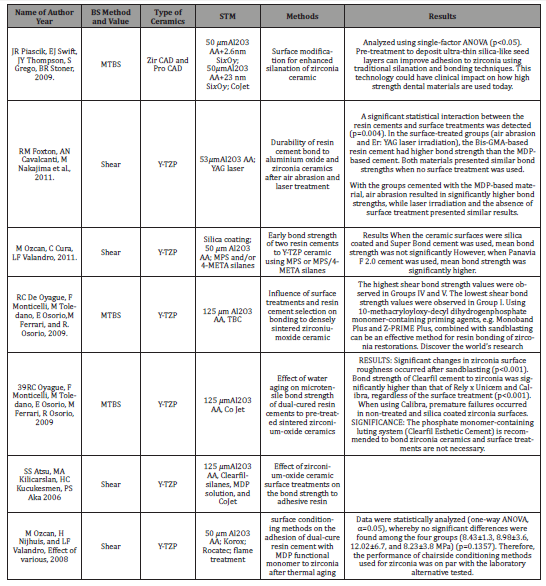
Table 2:
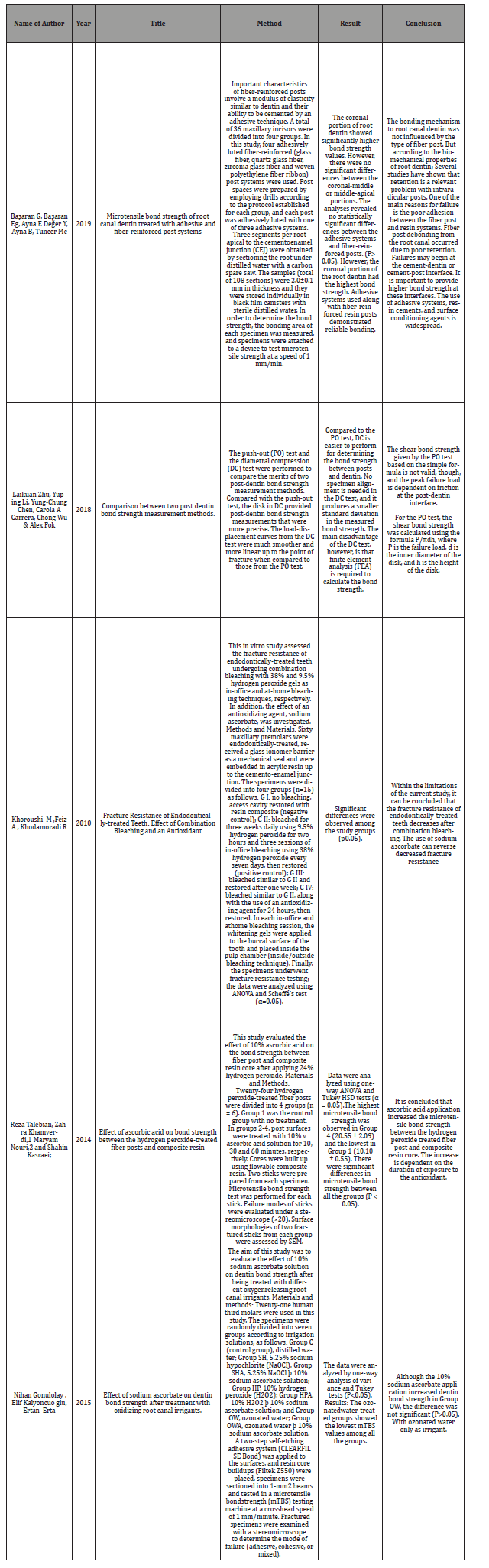
Table 3:
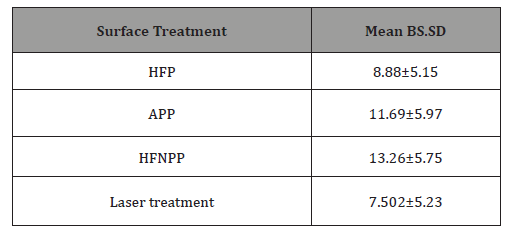
Table 2:
Discussion
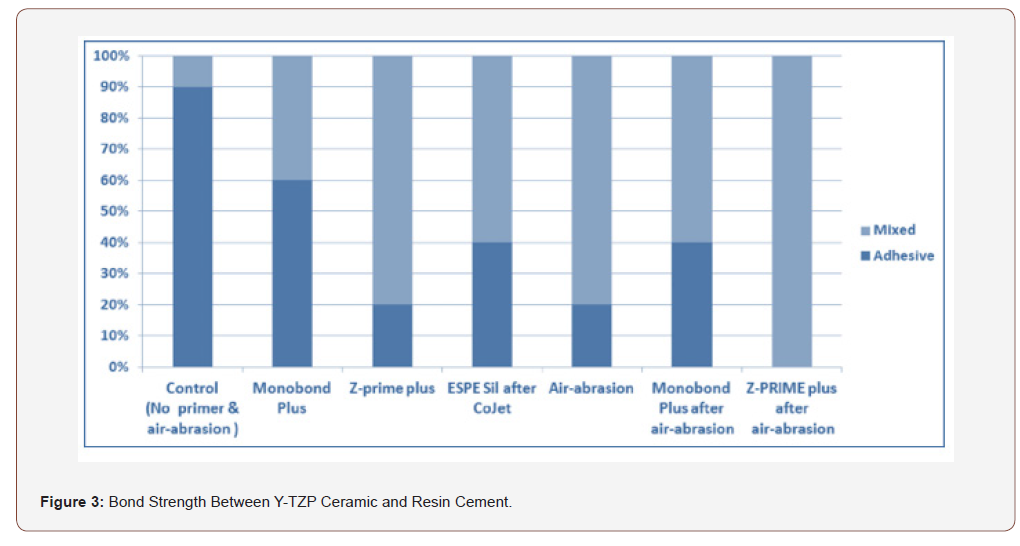
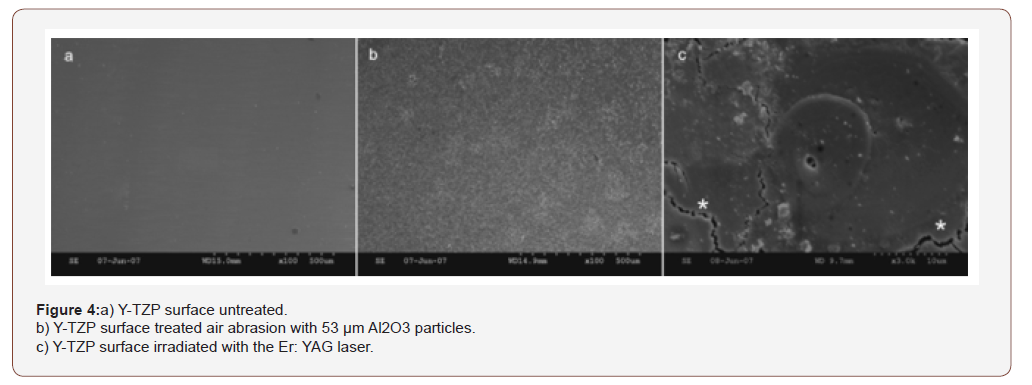
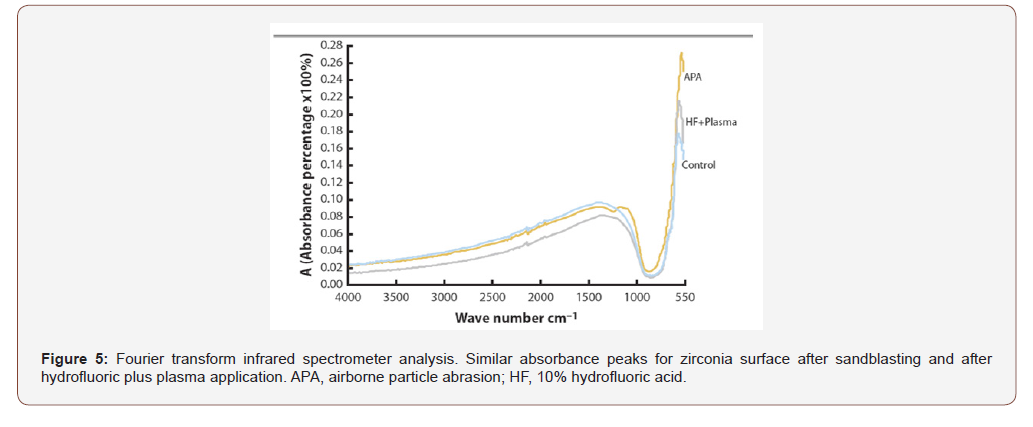
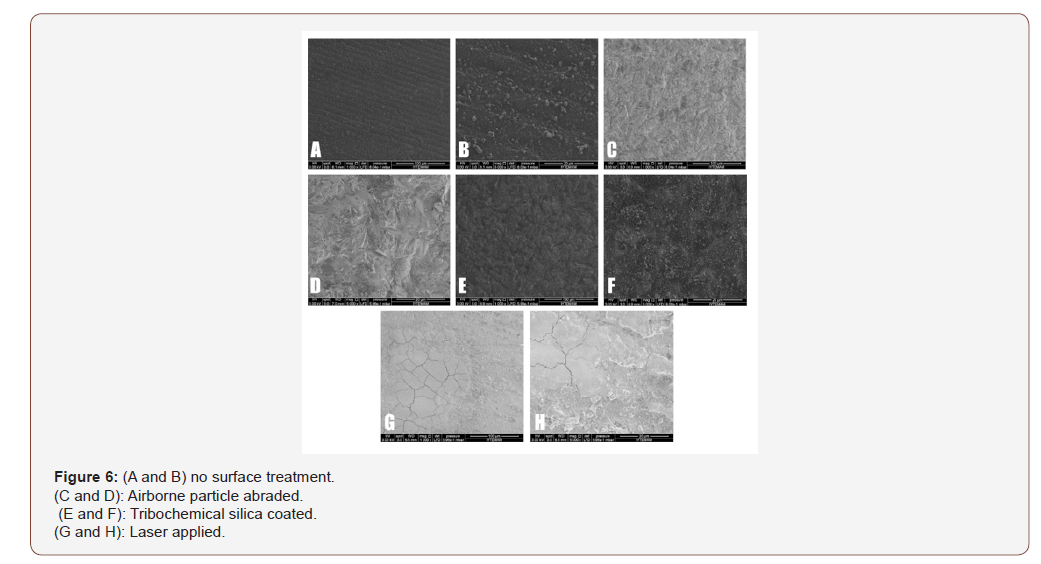
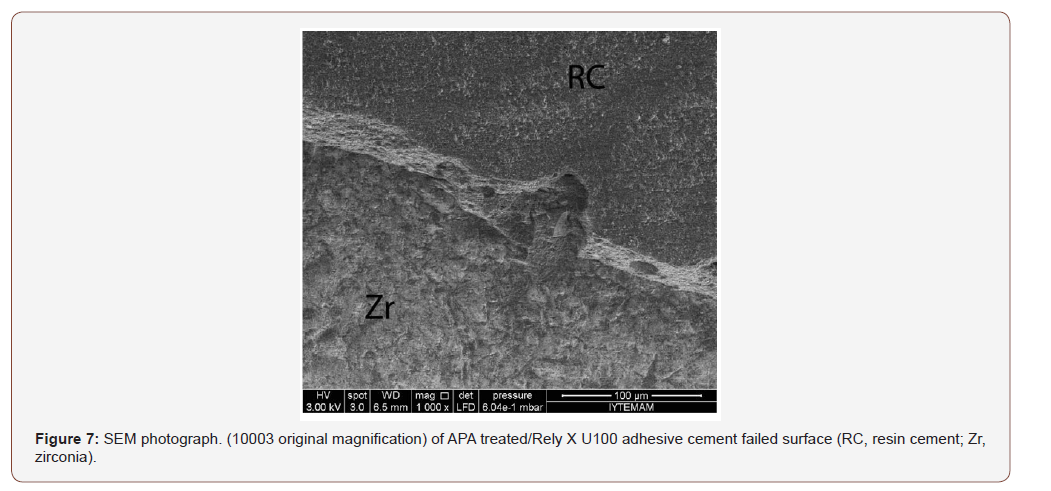
According to the analysis of the selected papers it could be seen that the use of Al2O3 air-abrasion followed by application of phosphate monomers-based primers or resin cement tends to produce more reliable results. Several surface treatment methods have been proposed to overcome intrinsic acid resistance of ZrO2; however, these methods have presented controversial results about their effectiveness on bond strength improvement. Nonetheless it seems important to select multifunctional methods, which mix the ability to create a rough surface for micromechanical interlocking and increase the surface area to establish chemical bond with reactive substances.
Yang et al. [9], agreed and stated that a reliable bond strength after air-abrasion at 2.5 bars or the combination of low-pressure air-abrasion and priming with MDP-containing primers. Proper restoration of endodontically treated teeth begins with a good understanding of their physical and biomechanical properties, restorative and occlusal principles. Although many new restorative materials have become available over the past several years, some basic concepts in restoring endodontically treated teeth remain the same. One of the main concerns in this systematic review is the Bonding in Endodontically Treated Teeth and how affect in bond strength to zirconia restoration. Reduced bond strength after endodontic treatment demonstrated clinically by debonding of zirconia restoration and showed to increase the bond strength and this may be due to reverse the oxidative effect on dentin this is agreed with Başaran G et al. [31], Laikuan Z et al. [32], Khoroushi M [34]. Who stated that the antioxidant ability of sodium ascorbate helps neutralize and reverse the oxidizing effects of the NaOCl. And Nihan Gonulol ay, et al. [35] who stated that 10% sodium ascorbate for one minute restores the original bond strengths allows free-radical polymerization of the adhesive to proceed without premature termination, reversing the compromised bond strength could be very effective in modifying dentin surface and hence affecting its bond strength to other materials Therefore they could also increase the resistance of dentin to biodegradation and hence stabilize the resin adhesive-dentin interface by attacking any residual bacteria or inhibiting the degradation of the hybrid layer.
Conclusion
Within the limitation of this systematic review it can be concluded that: Sodium ascorbate may restore strengths allow free adhesive to precede, reversing the change in dentin surface and consequently increase bond strength. The changed dentin will resist bacterial biodegradation.
For more open access journals in iris Publishers
https://irispublishers.com/journals.php
For more articles in Dentistry & Oral Health:
https://irispublishers.com/ojdoh/
Read more: Full Text

Comments
Post a Comment