Chemotherapy Induced Lingual Hyperpigmentation| Iquebal Hasan
Chemotherapy Induced Lingual Hyperpigmentation| Iquebal Hasan
Iquebal Hasan| Chemotherapy Induced Lingual Hyperpigmentation
Introduction
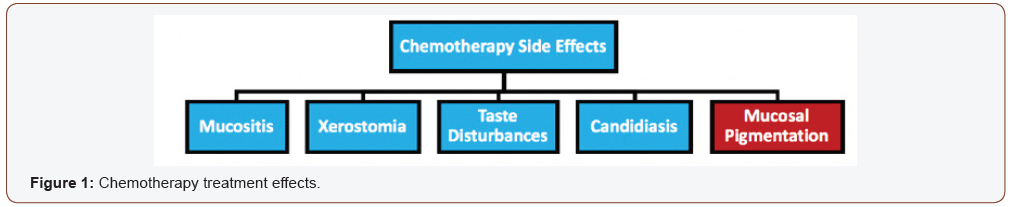
Chemotherapy drugs can cause hyperpigmentation, altering the pigmentation of skin, mucous membranes, and nails in generalized or localized areas [3,4]. Palate and gingiva are the most common sites affected. However, it can also be seen on the tongue. Darkened blotches on the tongue may appear as soon as 1or2 chemotherapy doses into treatment. Hyperpigmentation acquired in conjunction with chemotherapy may begin to fade between weeks to months after completion of treatment [4]. However, this can also remain long-term and become a permanent side-effect of chemotherapy.
Iquebal Hasan Articles from Iris Publishers
Case Report
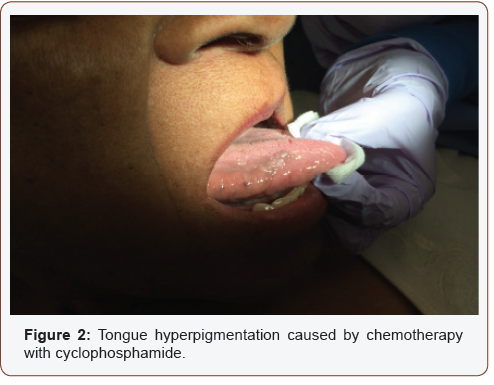
This article presents a 58-year-old African American female experiencing localized gum bleeding during brushing as well as hyperpigmentation on the tongue (Figure 2). Upon presentation, the patient’s current medical status included hypercholesterolemia, diabetes, irritable bowel syndrome, and dissociative identity disorder. Her medication regimen included simvastatin and metformin. Past medical history included breast cancer with surgical history of C-section and modified radical mastectomy. Cyclophosphamide was the chemotherapeutic drug used to treat her breast cancer.
Results
Discussion
There are certain side-effects associated with chemotherapy that effect the oral cavity in a variety of ways. These side effects can be classified into two categories: short term and long term. Fortunately, the majority of the side effects are short term which do not last more than a few weeks after completion of chemotherapy. Hyperpigmentation of the oral mucosa is one of the only long-term or permanent side-effects. Principles, techniques, and management of oral hyperpigmentation is still not fully understood. Currently, based on observations, the only known adverse side-effect of oral hyperpigmentation is poor aesthetics. To remove oral hyperpigmentation established during chemotherapy, patients need to undergo relatively invasive treatments. For example, some of the available surgical depigmentation options include scalpel surgery, abrasion with rotary abrasives, and diode lasers [6]. Adverse side effects other than unfavorable aesthetics and less invasive treatment or preventative options need to be researched and developed.
Some of the chemotherapeutic agents known to cause hyperpigmentation may include cyclophosphamide, busulfan, bleomycin, hydroxyurea, doxorubicin, cisplatin, etoposide and fluorouracil [2,3]. However, there is lack of data and knowledge to declare chemotherapeutic drug classes associated with this side effect. Drug dosages causing oral hyperpigmentation should also be investigated. Moreover, prevalence of oral hyperpigmentation associated with chemotherapy remains unknown.
There are conflicting ideas as to the mechanism driving oral hyperpigmentation with chemotherapy. Proposed mechanisms include accumulation of drug or drug metabolite deposition in oral mucosa, enhanced melanin deposition with or without an increase in melanocytes, or drug-induced post inflammatory changes [2]. Understanding the mechanism tied to this side effect may facilitate better treatment options or preventative mechanisms in the future. We need to develop better strategies to help with diagnosis of oral hyperpigmentation. History or record of pigmentation prior to chemotherapy should be properly investigated. Upon initial presentation, a size measurement and photo of the lesion should be documented. Initial size and appearance information and documentation can be used to monitor the lesion over the course of time. Lesion size or color changes are important to recognize when trying to rule out the possibility of melanoma. Chemotherapy is often the treatment of choice and first line of defense against many types of cancers. With a rise in cancer cases and chemotherapy use, dentists are likely to encounter patients with oral complications as a result of chemotherapy. Although oral hyperpigmentation is not very common, it is one of the complications that dentists may encounter. Based on current knowledge, this is a benign condition that does not significantly impact a patient’s overall health or quality of life. Correct diagnosis will avoid patients concern and unnecessary biopsies. It is imperative that dentists should have the knowledge and expertise to diagnose and monitor chemotherapy-induced oral hyperpigmentation.
Chemotherapy is often the treatment of choice and first line of defense against many types of cancers. With a rise in cancer cases and chemotherapy use, dentists are likely to encounter patients with oral complications as a result of chemotherapy. Although oral hyperpigmentation is not very common, it is one of the complications that dentists may encounter. Based on current knowledge, this is a benign condition that does not significantly impact a patient’s overall health or quality of life. Correct diagnosis will avoid patients concern and unnecessary biopsies. It is imperative that dentists should have the knowledge and expertise to diagnose and monitor chemotherapy-induced oral hyperpigmentation.
Read More Iris Publishers Online Journal of Dentistry & Oral Health Articles:

Comments
Post a Comment