Iris Publishers - Online Journal of Dentistry & Oral Health| Prosthodontic Rehabilitation of Missing Dentition Using Multi Unit Precision Attachment Hybrid Overdentures–Clinical Report of Two Patients

Authored by Hariharan Ramakrishnan,
Case Report1
A 68-year-old male patient visited the department of Prosthodontics. There is no significant medical, family and psychosocial history. On intraoral examination, there is evidence of terminal dentition in both maxillary and mandibular arches 21, 22, 23 (Maxillary left central and lateral incisors and canines) are healthy in the maxillary arch and 43,44,45 (Mandibular right are healthy in the mandibular arch. Treatment options are explained. Diagnostic impressions are made with alginate (Algitex, DPI, India) and casts (Kalabhai, India) poured in dental stone. Facebow transfer is done (Hanau wide vue, USA) and diagnostic casts are mounted on semi adjustable articulator (Hanau wide vue, USA) using occlusal rims (Baseplate wax, India) sealed in centric relation of jaws and evaluated for all parameters. After all these clinical and radiographic examinations, we have arrived to a treatment plan of restoring with combined prosthesis. Patient consent for the same obtained.
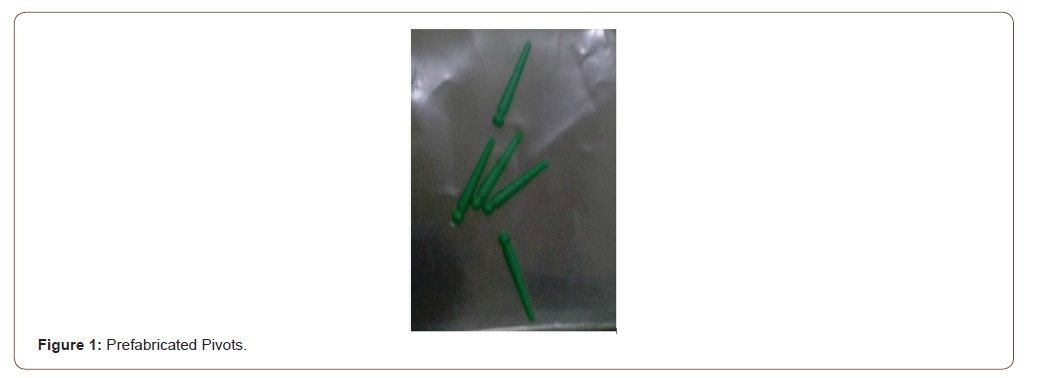
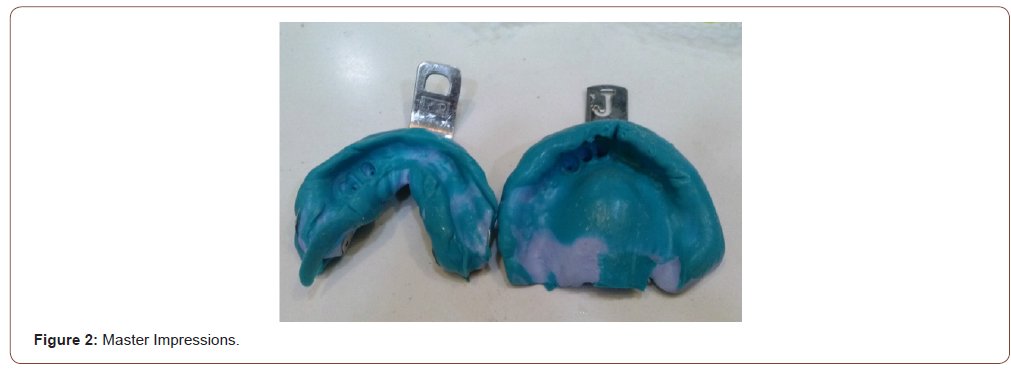
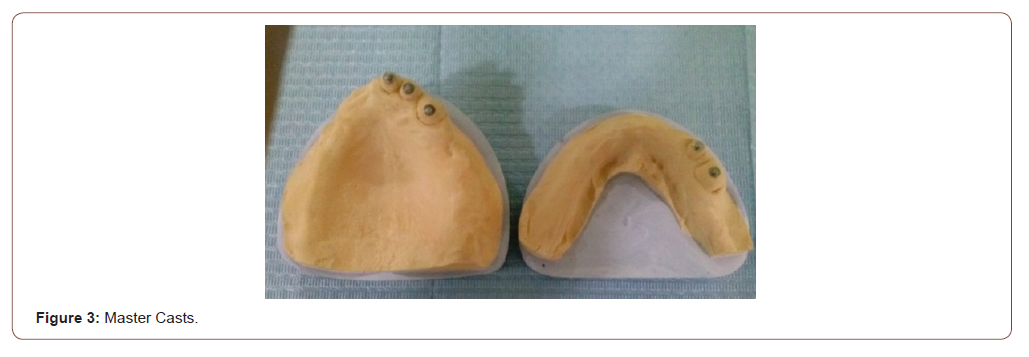
Root canal treatment is done for all of the remaining teeth with post space being prepared (Gates Glidden drill, Premier dental, USA) to provide space for the dowel to be inserted as part of combination prosthesis. Dome shaped teeth preparation is done with 1.5mm of axial walls close to surrounding gingiva. The external surfaces was prepared to receive over denture copings .Addition silicone light body material ( Flexceed, GC, Japan)is injected in and around the root canal with the help of a delivery tips ( Pinkblue, India) and Plastic pivots(Rhein 83, Italy), (Figure 1), coated with tray adhesive (GC, Japan) on the external surface are inserted into the root canals simultaneously and a pick up one stage full arch impressions of maxilla and mandible are made with putty addition silicone impression material ( Flexceed putty, GC, Japan), (Figure 2). Casts are poured with Type IV dental stone (Kalabhai ultra-rock die stone, India), (Figure 3).
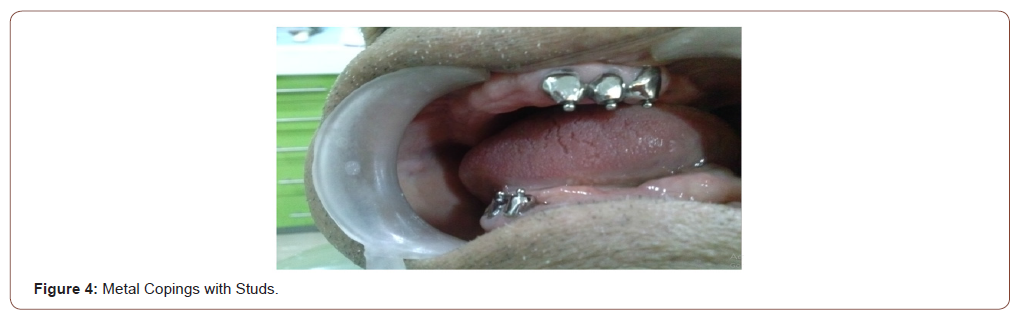
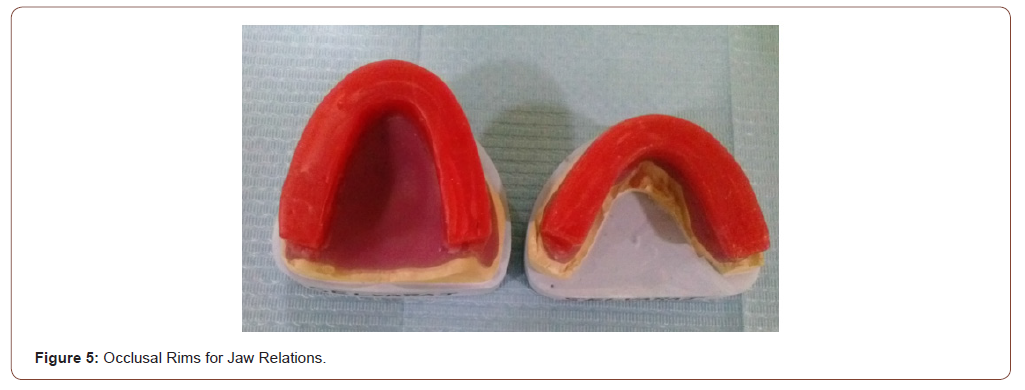
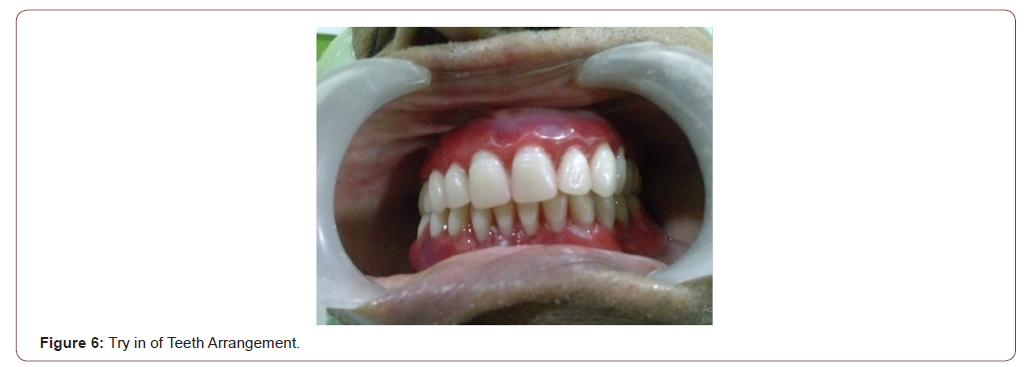
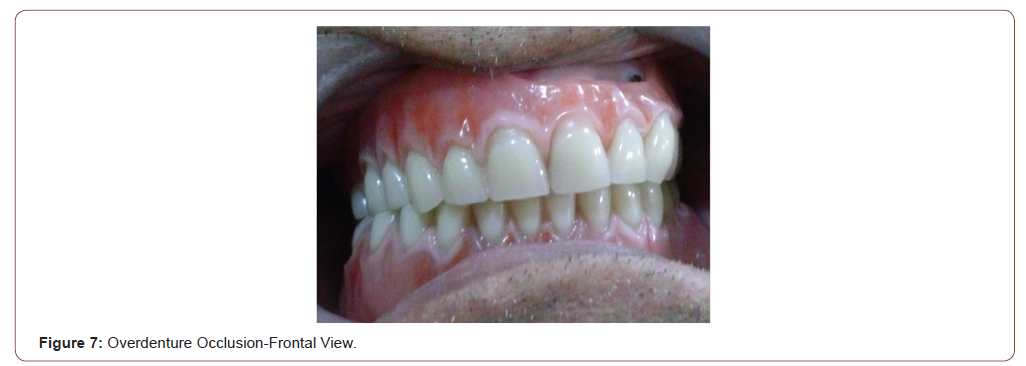
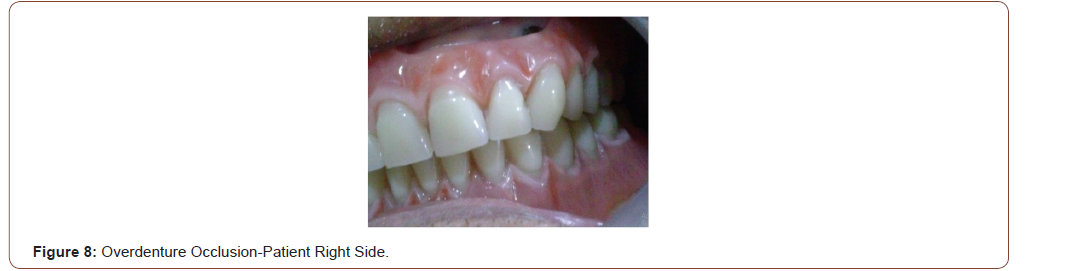
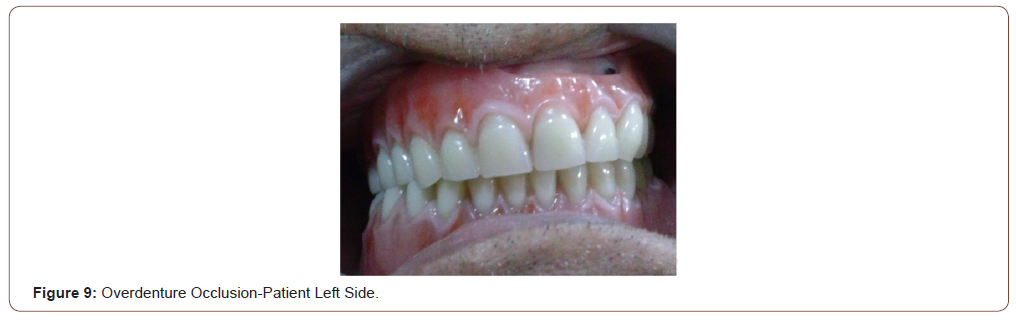
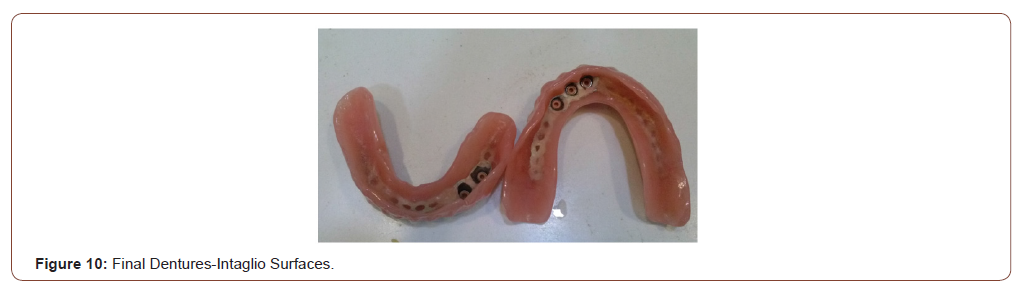
Surveying of the master casts is done to identify parallelism of copings to be cemented in future and also to identify path of insertion and removal of prosthesis. Individual wax copings (Pyrax, India) with custom dowel are fabricated in laboratory over the prepared natural teeth and cast in Chrome cobalt alloy (Form alloy, Indiamart). The castings (Figure 4) are tried in patient after trimming and polishing and they are picked up along with the retentive caps (Rhein 83, Italy) which was placed on the stud of copings ( Flexceed, GC, Japan) using one stage putty and light body addition silicone impression materials. Final Jaw relation is completed (Figure 5). Impression is sent to lab for fabrication of prosthesis along with semia djustable articulator. Teeth arrangement completed. (Acryrock, Indiamart) and try in is evaluated in the patient. The metal copings are cemented on to the prepared teeth first (Type 1, GIC cement, Japan). The final finished combined/hybrid prosthesis is tried in the patient and required occlusal corrections are done and final polishing carried out before insertion. (Figures 6-10) Cusp fossa occlusion is established. The patient is trained in wearing of the prosthesis and recalled after 24 hours for the necessary occlusal adjustments.
Case Report2
A 62-year-old female patient came to the department of prosthodontics complaining of missing teeth and wants to replace it with fixed restoration. There is no significant medical, family, and psychosocial history. On intra oral examination, the teeth present in the maxillary arch are 15,13,12,11,21,22,23,26 (Maxillary right central, lateral, canine, second premolar, left central, lateral, canine, and first molar) and in the mandibular arch are 33,34,35 (mandibular left canine , first and second premolar) the patient had generalized caries in both maxillary and mandibular teeth and was sent to conservative dentistry department for restorations in all the carious teeth. Oral prophylaxis was carried out through scaling and polishing.
All the possible treatment options were explained, then fixed partial dentures in maxilla and precision attachment fixed removable prosthesis are planned in the mandible. Diagnostic impressions are made with alginate (Algitex, DPI, India). Diagnostic casts are poured with dental stone (Kalabhai, India). Facebow transfer (Hanau wide vue, USA) is done and tentative jaw relation is made. Then three mandibular teeth are root canal treated and post space is prepared. Maxillary teeth are prepared to receive a four unit fixed dental prosthesis in relation to 13,14,15 and 16 as cantilever and four unit in relation to 23,24,25,26. mandibular teeth are subjected to dome shaped preparation to receive metal copings with dowels.
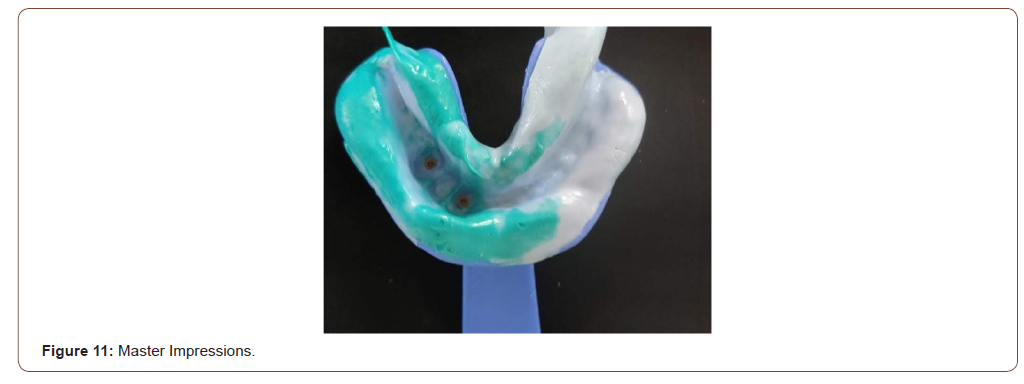
Addition silicone impression material (Flexceed, light body, putty, GC, Japan) is injected in and around the root canal with the aid of plastic dispensing tips attached to material dispensing guns (Pinkblue, India). Plastic pivots (Rhein 83, Italy), coated with tray adhesive (GC, Japan) are inserted into the root canals and a pickup full arch impressions of the mandible is made (Figure 11). Casts are poured with Type IV dental stone (Kalabhai ultra-rock die stone, India) dental stone. Surveying of the master casts is done to identify the parellelism of the proposed copings and the prosthesis.
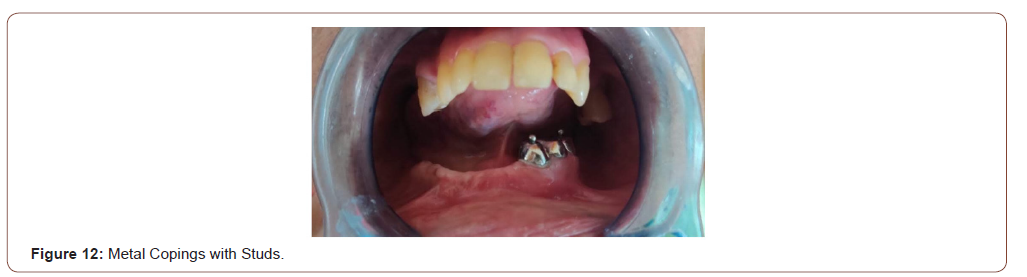
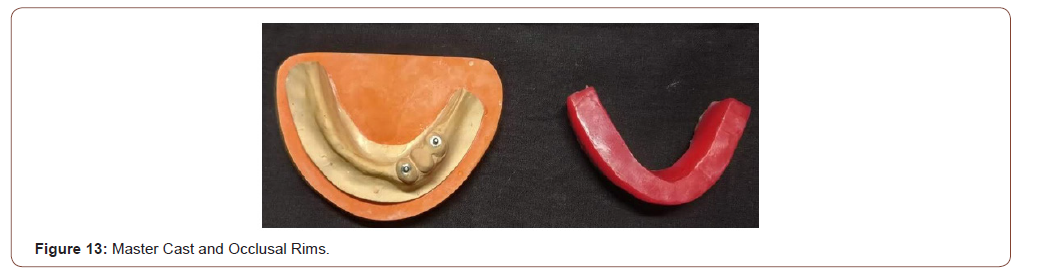
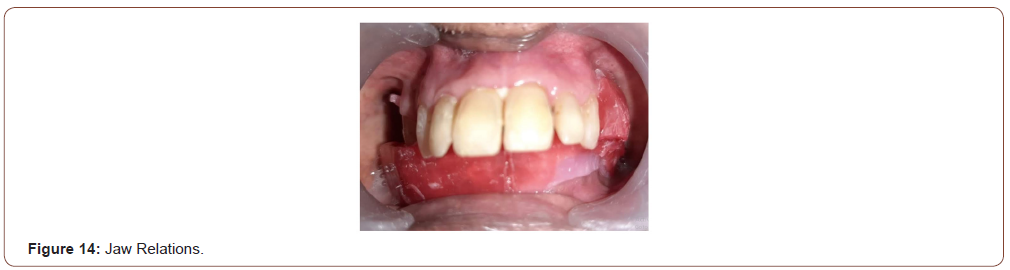
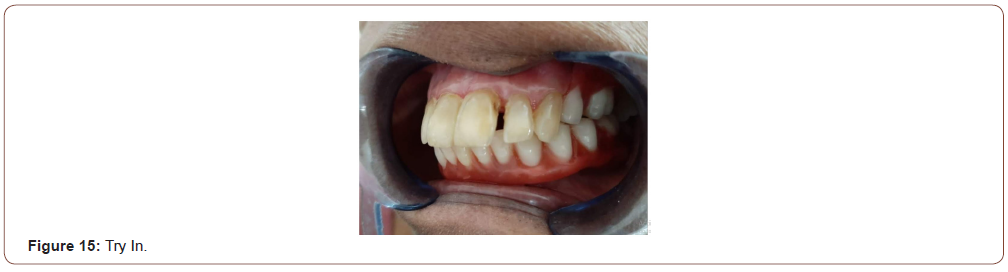
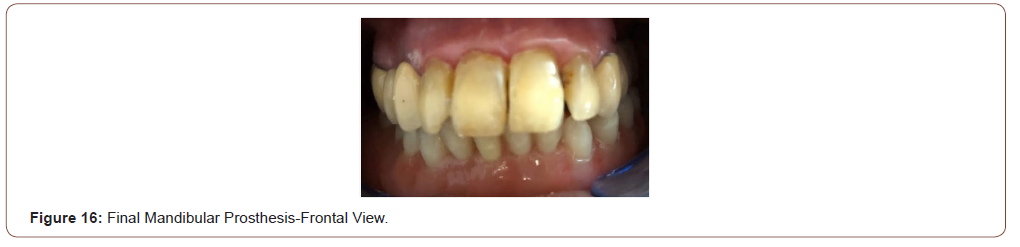
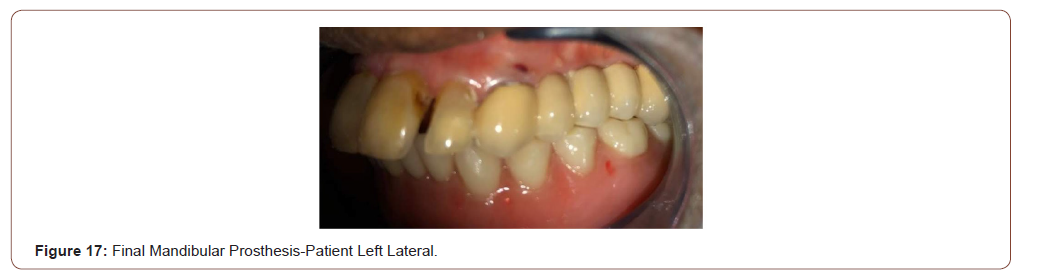
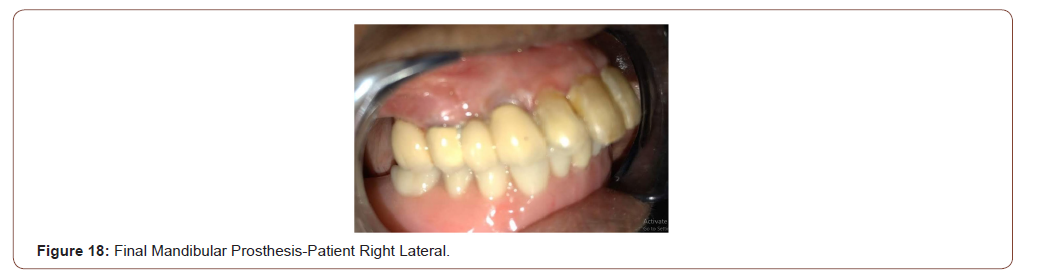
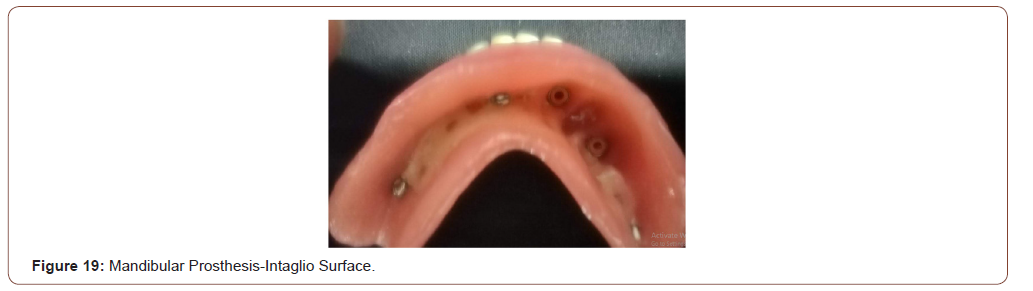
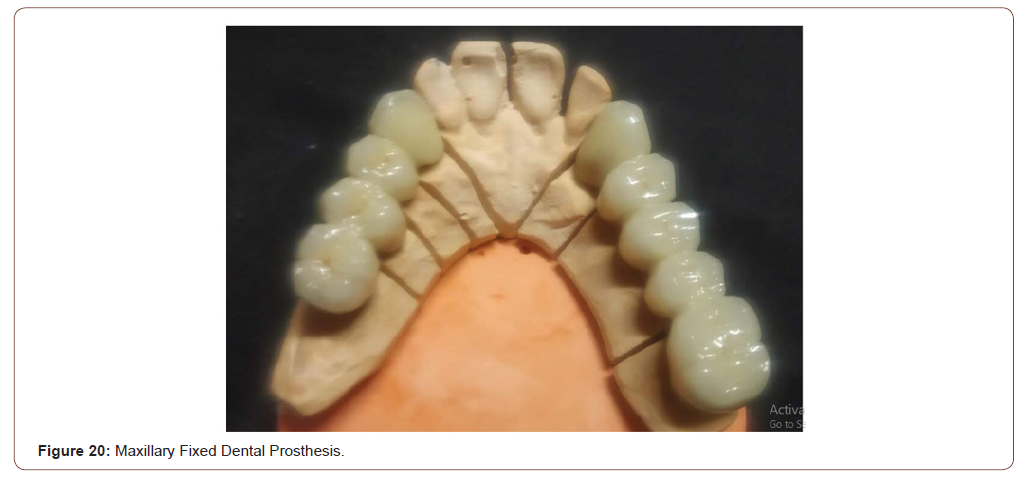
Individual wax copings (Pyrax, India) are fabricated and cast in chrome cobalt alloy (Form alloy, Indiamart). The castings (Figure 12) are tried in patient after trimming and polishing and are picked up along with the retentive caps (Rhein 83, Italy) which are placed on the stud of copings in the final one stage putty master impression. It is sent to lab for fabrication of prosthesis. Final jaw relations made. (Figure13, 14). Teeth arrangement and subsequent try in, is evaluated in the patient (Figure 15). The metal copings are cemented on to the prepared teeth first (Type1, GIC cement, Japan). The final finished prosthesis is tried in the patient and required occlusal corrections are done and final polishing is done before insertion. The patient is trained in wearing of the prosthesis and recalled after 24 hours (Figures 16-20). The necessary adjustments are done.
Discussion
Trends have changed from patient need to replace missing teeth with prosthesis , to a more preferable one where the restoration will be fixed one. In view of patient terms, the term fixed mainly indicates retention [8,9]. Considering the fixed treatment options in edentulous areas without distal abutment not only includes implant retained restoration but also a combined prosthesis with a precision attachment [10-12]. Introduction of CAD CAM in dentistry enables the production of various precision and semi precision attachments [13,14] Using these attachments for the purpose of retention in the prosthesis enhances retention, distributes the stress evenly in terms of function, improves esthetics by hiding the metal components as a part of it, supports and preserves adjacent teeth and alveolar bone. Thus, it helps to overcome the challenge in case of terminal edentulous areas and fulfills the patient desire and comfort [15-17].
Various cases with esthetic and retention challenges can be solved with correct selection of Attachment. Rhein 83 attachments used here are most commonly indicated for long edentulous span, distal extension bases and non-parellel abutments [17,18]. Combined prosthesis option should follow obtaining thorough knowledge, proper case selection, selection of appropriate attachment and prosthesis design. Patient should also be educated about proper hygiene and maintenance [18].
Conclusion
Prosthodontic treatment aims to restore the missing dentition but whatever is the trend, prosthetics should also take care of preservation of existing anatomy. Attachments have an important role to play, by way of preventive prosthodontics that revolves around health, function or esthetics, and have the capacity to impact patients in life changing ways. Availing support from the remaining terminal dentition will help in maintaining proper proprioception, better retention and preservation of healthy supporting structures. Thus, in patients with terminal dentition fixed removable precision attachment over dentures with properly selected attachments will boost patient’s confidence, comfort, security and will provide very much satisfied results [19].
For more open access journals in iris Publishers https://irispublishers.com/journals.php
For more articles in Dentistry & Oral Health: https://irispublishers.com/ojdoh/
Read more: Full Text
To know more about iris publishers reviews: https://www.sitejabber.com/reviews/irispublishers.com

Comments
Post a Comment